Melania, Re-read From 2026: Calibrated Restraint as a First Lady’s Position

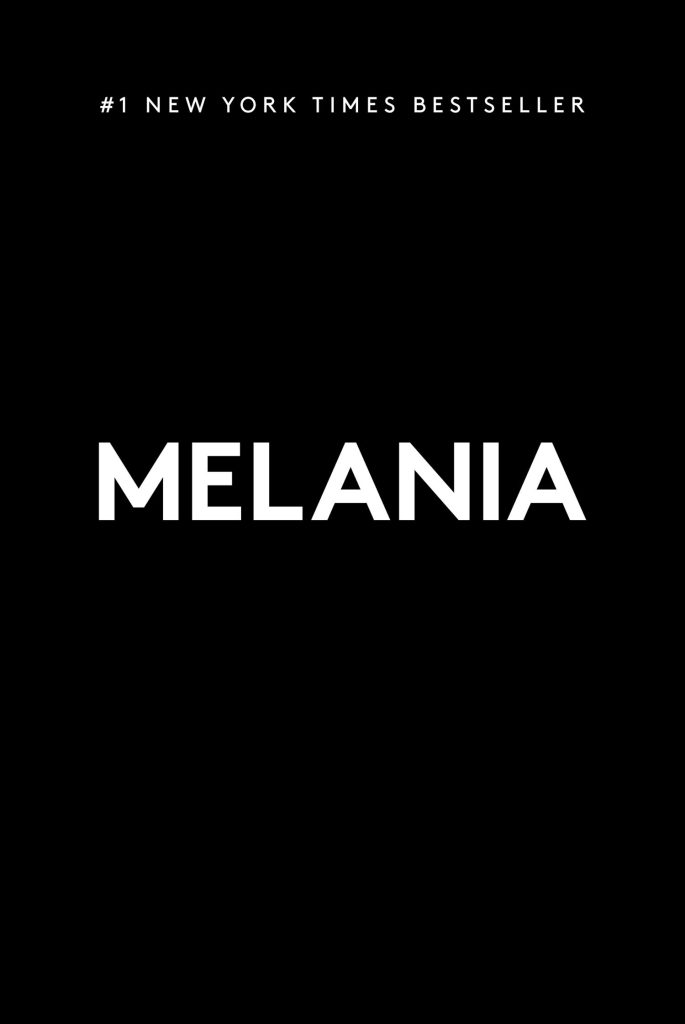
Melania Trump's 2024 memoir was reviewed before the election with one frame; reviewing it again in 2026 lands a different book.
The book closes the way most political memoirs don’t. After 256 pages of measured reminiscence, Melania Trump places a letter to her fellow Americans, and inside it, this line: “Let us not forget that differing opinions, policy, and political games are inferior to love.” Read in October 2024, that landed for many critics as a soft pivot to brand-management. Read now, in the spring of 2026, with the election decided and Melania again in the East Wing, it lands differently — less like the closing pose of a campaign asset and more like a thesis statement for a second First Lady tenure.
Trump’s Melania (Skyhorse, hardcover, $40, 256 pages, October 8, 2024) debuted at #1 on the New York Times bestseller list and stayed there. It’s a political memoir from a woman who has held one of the most-photographed and least-quoted public roles in American life — former and now-again First Lady, married to a president the press has covered like no other. The book arrived four weeks before the November election. Critics read it as a campaign deployment timed to do work the campaign couldn’t, and reviewed it on those terms: was it persuasive, did it move undecided voters, did it humanize. The 2026 reread is a different exercise. The election is over. The book that was supposed to do work for the campaign now does work as the establishing document for a returning tenure.
The memoir’s structure is roughly chronological — a childhood in socialist Slovenia, the modeling years, the New York meeting in 1998, the marriage, the first White House tenure, public moments — and selectively thematic where the chronology would feel rote. What’s notable is what the book doesn’t do. It doesn’t deliver the expansive autobiographical exposure the genre’s recent benchmark, Michelle Obama’s Becoming, made into a template. It doesn’t dwell on the kinds of intimate disclosures memoir readers may have come for. The personal anecdotes that do appear are deliberately framed and cut where many memoirists would keep going.
The book’s clearest substantive policy moment is its statement on abortion rights. Trump writes that she has held the position “throughout my entire adult life,” and that women must have autonomy in deciding what happens to their own bodies, free from government pressure. The position broke from the Republican Party platform and was widely reported days before the election. It became the headline-driving substance of the book’s reception. In the proportions of the memoir itself, it is one moment among several — a position taken, defended, and not made into the book’s centerpiece.
The book’s public launch was structured as carefully as its prose. Melania chose the Fox & Friends interview with Ainsley Earhardt on September 26, 2024 — her first television interview in over two years — as the launch moment, followed by an hour-long Sunday FNC special. The choices around the rollout match the choices on the page: a single venue, a controlled pace, a refusal to scatter into the mainstream-press blanket-tour pattern.
The negative critical consensus on the book is dominated by two frames. The Atlantic ran the headline “Melania Really Doesn’t Care.” and read the prose as a clinical exercise in compartmentalization — the argument was that the book’s restraint isn’t quiet dignity but selective inattention to anything that would complicate the story. New York Magazine landed an in-between verdict, calling the book one that “tells too much to be a low-effort cash grab” but, the same review argued, under-delivers on the intimate access a memoir reader might have come for. Together those two frames carry most of what mainstream press said.
Both frames are responding to the same prose feature: the book doesn’t open up. The disagreement is what to make of that. The critics treat it as failure — a memoir that withheld what memoirs are supposed to give. A reader inside the audience this book was actually written for may notice that Melania has held this same posture in public for a decade. The reticence isn’t a failure to deliver intimate material; it’s a refusal to traffic in it. That’s a position. It’s also the posture that defined Laura Bush’s Spoken from the Heart and, further back, Barbara Bush’s memoir: the Republican-spouse mode of disclosing-without-confessing. Melania pushes that mode further than her predecessors. Whether that reads as too far depends on what you came to the book for.
The abortion-rights moment is the test case. Critics led with it because it was politically newsworthy four weeks before an election. In the book’s actual proportions, it’s a chapter-moment, not a centerpiece — a position stated and defended, not reframed as the book’s organizing argument. The right read is to take it on its own terms, both as policy commitment and as one moment among several where Melania is willing to be unambiguous. Treating it as the book’s whole point flattens a more characteristic move: a clean statement, then a return to the controlled pace.
The prose carries a singular voice — whether by solo authorship (the title page bears Melania Trump’s name only) or by careful editing, a single sensibility holds the chapters together. There’s no committee feel. Anthony Sadar, reviewing in the Washington Times from the vantage of someone who shares Melania’s Slovenian heritage, called the book resonant. The 2026 reread tends to confirm that resonance more than the pre-election skepticism did.
How it compares
The political-spouse memoir is a real subgenre with internal variety, and Melania sits in it precisely. The benchmark for modern First Lady memoir is Michelle Obama’s Becoming (Crown, 2018), which set a template of voice-of-author authenticity, narrative warmth, and willingness to disclose. Melania’s book is a different object. Where Obama opens up at length about her interior experience, Melania declines to do the equivalent. Where Obama’s prose is conversational and expansive, Melania’s is composed and clipped. These aren’t worse and better versions of the same project; they are different modes.
Closer to Melania in posture is Laura Bush’s Spoken from the Heart (Scribner, 2010). Bush is reserved by Becoming’s standards but discloses substantial personal material. Melania pushes the Republican-spouse reserve further. The closing letter that reviewers found so unsatisfying — placed where Bush would have placed a more conversational outro — is Melania’s signature move: insist on the principle, decline to elaborate. Read inside the tradition Spoken from the Heart anchors, Melania is a recognizable variation on a recognizable form, not the failed celebrity memoir the critics described.
Verdict
Read Melania if you’re sympathetic to the Trump political project and want a personal counterweight to the press-package version of Melania Trump. Read it for the closing letter and for the Slovenia chapters — the prose is at its strongest where the public-figure pressure is at its lowest. Read it as a study in how a public woman keeps her composure on a page; that part is well executed. Skip it if you came for intimate disclosure or political combat. Melania is neither. The book is a calibrated artifact for a calibrated audience, and 2026 is a better moment to read it than 2024 was.
Where to buy
Written by DJT Backyard
Responses (0)
No responses yet
More from DJT Backyard
Seventeen Months: Carl Cascio and the Palm Beach County GOP
Eighteen months ago the Palm Beach County Republican Party was making national headlines for internal turmoil. The voter-registration gap with the Democrats…
Donald Trump and the Long Way Back to the White House
After defeat, four indictments, a felony conviction, and a bullet that grazed his ear in Pennsylvania, the 47th President took the oath…
Recommended from DJT Backyard
Accessibility
DJT Backyard aims to be accessible to all readers. We follow WCAG 2.1 AA guidelines. What we’ve done Color contrast meets or…
Candidates
The Republican candidates running for office in Palm Beach County and across Florida — incumbents, challengers, primaries, and the path to November.…
Contact Us
Get in touch with the editorial team at DJT Backyard. Text us From your phone, tap the button below — the SMS…
Editorial Standards
DJT Backyard publishes news and commentary from a conservative perspective on Palm Beach County and beyond. These standards govern how we work.…